food · camping · packing · updated 2026-08-02
What to eat at a festival: the food and hydration plan that actually works
Festival food logistics get a fraction of the planning attention tents and earplugs do, and it shows by day two: half the campground is either overpaying for a lukewarm quesadilla in a thirty-minute line or eating the same gas-station granola bar for the fourth time running. Neither failure is about willpower. It's a planning gap, and it's really two separate problems wearing one trench coat — what you eat during ten hours on your feet, and what your camp eats between sets when nobody has the energy to cook.
Solve those two problems separately and the whole weekend gets easier, cheaper, and considerably less likely to end with someone hunched over a porta-potty at 2am for reasons that have nothing to do with the beer.
The day-bag snack kit
Anything that melts, crushes, or turns in a hot bag by 2pm doesn't belong in it. A banana is paste by lunchtime, chocolate is soup, and a sandwich made at 9am is a genuine health question by the time the headliner starts. What actually survives a day in a backpack: nut butter packets, jerky, trail mix without the chocolate chips, dried mango, and hard cheese if you're eating it within a few hours of packing it. Apples and oranges hold up in a way bananas never do — the peel is doing structural work a ziplock bag can't.
Salt matters as much as calories here, and it's the part people forget to plan for. A bag of pretzels or a handful of salty crackers does more for how you feel at hour eight than a second granola bar, because ten hours of sweating costs you sodium that plain carbohydrates don't replace. Fill an insulated bottle — the kind that's still holding cold water at the headliner, not room-temperature swill — before you leave camp, and treat it as one system with the salty snack rather than two separate items.
Camp cooking without a full kitchen
Most first-time camps overbuild the kitchen and then use about a third of it after day one. What actually gets used: a single burner, one pot big enough for pasta or rice, and a roll of tin foil. Foil-packet meals — chopped vegetables, a protein, a spoon of oil, sealed shut and set on coals or a grate — cook themselves while you do literally anything else, and cleanup is throwing away foil instead of scrubbing a pan by headlamp.
For the nights nobody wants to cook, no-cook dinner earns its keep: tortillas, canned beans, pre-cooked rice pouches, whatever cheese survived the cooler. Wrap it, eat it, done in four minutes. One real cooked meal a day is plenty for most camps — the rest can be assembled, not prepared. At festivals where nothing gets sold on-site at all, Burning Man being the extreme version of this, cooking water is also drinking water and washing water, so a couple of large water containers earn their space in the car before a single skillet does.
The cooler's real order of operations
A cooler is a countdown clock, not a fridge, and the mistake almost every first-timer makes is packing it without a plan for which order things get eaten. Fresh produce, deli meat, and anything dairy go first, on day one and two, while the ice is still solid and the temperature swings are smallest. Shelf-stable food — jerky, canned goods, dehydrated meals, the block of cheese that's held up fine — moves to day three and four, once the ice has half-melted and you don't fully trust the internal temperature anymore.
If meat or dairy has been sitting above roughly 40°F for more than a couple of hours, or it smells even slightly off, it goes in the trash, not the pan. A stomach bug at hour thirty of a four-day festival is a much worse trade than a wasted chicken breast. Keep raw meat sealed in its own bag at the bottom, away from anything you'll eat without cooking it first. And every time the lid opens, cold air leaves for good — canned drinks live better in a cheap koozie sitting outside the cooler than they do taking up ice-adjacent space that food which can actually spoil needs more.
Eating on festival grounds without wrecking the budget or your stomach
Vendor lines peak exactly when everyone's hungriest — the dinner rush at a festival makes an airport gate at boarding time look organized, and the 7pm queue is not the moment to discover you skipped lunch. Eat something small before you're actually hungry, on the same logic as drinking before you're thirsty, and save the vendor splurge for one meal a day instead of three. That turns a $16 loaded fries plate from a tax on being unprepared into something you're actually looking forward to.
Busy stalls are the safer bet as much as the tastier one. High turnover means the food hasn't been sitting under a heat lamp since noon, which matters more in August sun than most people think about until they're the one leaving early. A short line at a stall at 3pm and an empty one at 6pm is information, not a coincidence.
Packing for dietary restrictions
A festival's website listing "vegan and gluten-free options available" usually means one stall, one dish, and a real chance it's sold out by Saturday afternoon. If a restriction actually matters to your health, plan as though the promised option won't be there: pack enough shelf-stable meals and snacks that meet it to cover at least one full day on your own, not just a backup granola bar shoved in a side pocket.
Tell your campmates about the restriction before the group starts cooking, not while the pot's already on the fire. Cross-contamination in a shared skillet is an easy problem to prevent and a miserable one to manage after the fact, and most camps are glad to work around it once someone actually says something out loud on day one.
The salt math nobody explains
Four days of sweating drains sodium faster than plain water replaces it, and the shaky, headachy, vaguely nauseated feeling people blame on the heat, the beer, or the crowd is often just low salt. Electrolyte powder dissolved into a water bottle mid-afternoon fixes this faster than food does. Pickles work almost as well and taste better cold out of a cooler — the brine is basically an electrolyte drink with a snack attached, which is exactly why they show up in bulk at self-reliant camping festivals.
None of this is a reason to skip water. It's a reason to stop treating water as the whole solution once you're past about six hours of heat and walking — at that point, sodium is doing work that volume alone can't.
The last day and the morning after
Plan the final day's meals around using up whatever's left in the cooler rather than buying anything new. The last morning is a bad time to discover three pounds of half-melted ice and half a dozen eggs you now have to pack out or throw away. A simple hangover breakfast — something with carbs and salt, nothing that requires real cooking — is worth having a plan for before you need one, because the version of you making food decisions at 9am on the last day is not operating at full capacity.
Pack out food waste the same way you pack out everything else. Scraps left at a campsite are a raccoon problem for the campground and a bad look for everyone camped near you, long after your crew has driven home.
Mentioned in this guide
The gear that does the work
As an Amazon Associate we earn from qualifying purchases. It never changes what we recommend.

Owala FreeSip 32 oz bottle
Fill it at every water station you pass. Insulated enough that the water is still cold at the headliner.
Check price on Amazon
Ultima electrolyte packets
One stick per bottle refill on hot days. Water alone stops being enough somewhere around hour six.
Check price on Amazon
Van Holten's pickles-in-a-pouch (12)
Salt, crunch, and cold brine in the desert — a legendary playa gift for good electrolyte reasons. Chill them in the cooler first.
Check price on Amazon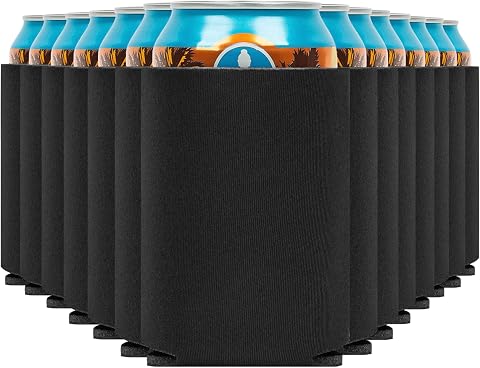
Blank can koozies (30-pack)
Keeps drinks cold and doubles as a canvas: decorate them at camp and gift art instead of trash. Also solves the whose-can-is-whose problem forever.
Check price on Amazon
Reliance Aqua-Tainer 7 gallon
The math is 1.5 gallons per person per day and nothing is sold on playa. Two of these per person is the standard answer, and the spigot makes camp life civilized.
Check price on AmazonQuick answers
Asked and answered
What food should I pack for a festival?
Split it into two piles: day-bag snacks that survive heat without melting or crushing (jerky, nut butter packets, dried fruit, salty pretzels, an apple over a banana), and camp food for the cooler, ordered so fresh and dairy items get eaten in the first two days and shelf-stable items carry you through the last two.
How long does food last in a cooler at a festival?
Plan on about two days of real cold before the ice starts losing the fight, so eat perishables — meat, dairy, fresh produce — first and shift to canned or dehydrated food by day three. Anything that's been above roughly 40°F for more than a couple of hours, or smells even slightly off, goes in the trash, not the pan.
What if a festival doesn't have good vegan or gluten-free food?
Treat any vendor promise of dietary options as a maybe, not a guarantee — the one stall that covers it often sells out by Saturday afternoon. Pack enough shelf-stable meals that meet your restriction to cover at least a full day on your own.
How much water and electrolytes do I need at a festival?
Plain water covers you for the first several hours of a hot day. Past about six hours of heat and walking, add electrolytes or something salty like pretzels or pickles, because sweating that long drains sodium faster than water alone replaces it.